
Bambu A1 3D Printer

3MF Projects
STEP Support
3D Text
Explore Bambu A1 3D Printer features, specs, Bambu A1 Combo, AMS Lite, filament support, Bambu Studio and accessories.
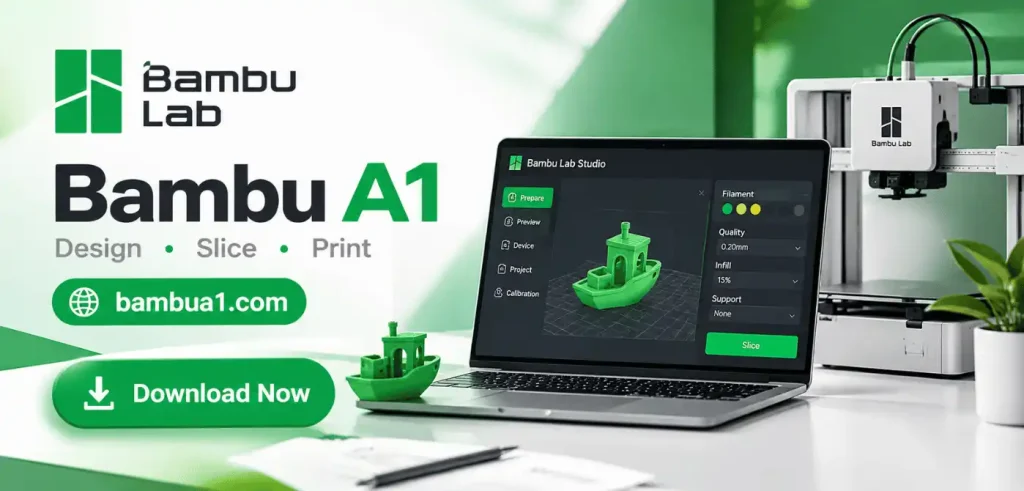
Bambu A1 3D Printer
The Bambu A1 3D Printer brings fast, accurate, and user-friendly 3D printing to beginners, hobbyists, educators, and creators. It combines smart automation, reliable performance, and an easy workflow to help users create detailed models without spending hours adjusting printer settings.
Unlike traditional 3D printers that often require manual calibration and technical knowledge, the Bambu Lab A1 focuses on simplicity. Its intelligent systems handle many important printing tasks automatically, allowing users to spend more time designing and creating.
The printer supports a wide range of creative projects, from small decorative models and educational designs to functional household parts. With strong printing performance, automatic calibration, and compatibility with modern slicing software, the Bambu A1 offers a complete experience for anyone exploring desktop manufacturing.
Whether you are starting your first 3D printing project or looking for a reliable upgrade, the Bambu A1 3D Printer provides a balanced combination of speed, quality, and convenience.
What Is Bambu Lab A1?
The Bambu Lab A1 is a desktop FDM 3D printer designed to make high-quality printing easier for different types of users. It uses advanced motion control, automated calibration features, and smart monitoring technology to deliver consistent results.
The printer belongs to the A1 series, which focuses on accessibility and efficient performance. The series includes the standard Bambu A1, the compact Bambu A1 Mini, and the multi-color capable Bambu A1 Combo.
The main goal behind the A1 series is to simplify the printing process. Users can prepare a model, select suitable settings, and start printing without dealing with complex manual adjustments.
The Bambu A1 is suitable for:
- Beginners learning 3D printing
- Makers creating personal projects
- Students working on engineering concepts
- Designers testing prototypes
- Small creators producing customized items
The printer works with popular filament materials and connects with Bambu Studio, the official slicing software used to prepare and manage print files.
Why Choose Bambu A1 3D Printer?
Many desktop printers require users to manually adjust settings before every project. The Bambu A1 3D Printer reduces this complexity with automated systems that improve the overall experience.
It focuses on three important areas: ease of use, printing quality, and smart control.
Beginner-Friendly Printing Experience
The Bambu A1 makes 3D printing easier for new users. Its automated features reduce the learning curve and help beginners achieve better results from their first projects.
The printer handles important calibration processes automatically, which means users do not need advanced technical knowledge to begin printing. The simple interface also helps users understand the printing process step by step.
For beginners, this creates a smoother introduction to 3D printing. Instead of spending time troubleshooting basic settings, users can focus on creating designs and exploring new ideas.
High-Speed Printing Performance
Speed is one of the key advantages of the Bambu A1. The printer uses optimized motion control technology to maintain fast printing speeds while keeping models accurate.
Fast printing does not only reduce waiting time. It also improves productivity for users who create multiple designs or test different versions of a model.
The Bambu A1 balances speed with print quality, making it useful for both personal projects and regular creative work.
Automatic Calibration System
Calibration plays an important role in achieving successful prints. The Bambu Lab A1 includes automatic calibration features that help maintain consistent printing results.
The system checks important settings before printing begins. This reduces common issues related to first layers, print alignment, and surface quality.
Automatic calibration makes the printer more convenient because users do not need to manually adjust the machine before every project.
Quiet and Reliable Operation
A noisy printer can become difficult to use in home environments, classrooms, or shared workspaces. The Bambu A1 focuses on reducing operational noise through advanced motor control.
Its quieter operation allows users to work on projects without major distractions.
The reliable hardware design also supports longer printing sessions with consistent performance.
Smart Monitoring Features
The Bambu A1 includes intelligent monitoring features that help users manage the printing process.
Users can check print progress, monitor important conditions, and manage projects through connected software solutions.
These smart features improve convenience and help users identify possible problems earlier.
Bambu A1 Specifications
Understanding the technical details helps users decide whether the printer matches their requirements. The following Bambu A1 specs explain its main capabilities.
| Specification | Details |
|---|---|
| Printer Type | FDM 3D Printer |
| Build Volume | 256 × 256 × 256 mm |
| Printing Speed | Up to 500 mm/s |
| Nozzle Size | 0.4 mm |
| Filament Compatibility | PLA, PETG, TPU and more |
| Calibration | Automatic |
| Connectivity | WiFi and app control |
| Software | Bambu Studio |
The specifications show that the Bambu A1 is designed for users who want reliable desktop printing without unnecessary complexity.
Bambu A1 Build Volume and Print Size
The Bambu A1 build volume provides enough space for many everyday projects. With a 256 × 256 × 256 mm printing area, users can create medium-sized models without dividing designs into multiple parts.
The available print size works well for:
- Functional components
- Decorative models
- Educational projects
- Custom organizers
- Prototype designs
A larger print area gives creators more flexibility when working on different ideas.
Bambu A1 Dimensions and Design
The compact design of the Bambu A1 helps it fit into different environments. Users can place it in homes, offices, classrooms, and creative studios.
The printer design focuses on accessibility while maintaining strong performance. Its organized structure also makes maintenance easier for regular users.
Bambu A1 Combo – Multi-Color Printing With AMS Lite
The Bambu A1 Combo expands the printing experience by adding multi-color printing capabilities through AMS Lite technology.
The standard Bambu A1 works well for single-color projects, while the combo version gives creators more flexibility when producing colorful designs.
What Is Bambu A1 AMS Lite?
AMS Lite is a filament management system designed for automatic filament switching.
It allows users to work with multiple filament colors and create more detailed models without manually changing materials during printing.
With AMS Lite, creators can produce:
- Multi-color decorations
- Detailed characters
- Creative artwork
- Educational models
- Personalized designs
Benefits of Bambu A1 Combo
The Bambu A1 Combo provides additional creative options compared to the standard version.
Key benefits include:
- Multi-color printing support
- Automatic filament changes
- Better design flexibility
- More creative possibilities
For users interested in colorful models or advanced projects, the combo version provides extra functionality.
Bambu A1 Mini – Compact Alternative
The Bambu A1 Mini is a smaller version of the A1 series designed for users who need a compact printer.
It provides many smart features found in the standard model while using a smaller printing area.
The A1 Mini is suitable for:
- Small workspaces
- Beginners
- Students
- Users printing smaller models
While the Bambu A1 offers a larger build area, the A1 Mini focuses on portability and space efficiency.
Bambu A1 vs A1 Mini
The choice between Bambu A1 vs A1 Mini depends on project size, workspace, and printing requirements.
| Feature | Bambu A1 | Bambu A1 Mini |
|---|---|---|
| Build Size | Larger | Smaller |
| Workspace Requirement | More space | Compact |
| Project Size | Medium projects | Small projects |
| Beginner Friendly | Yes | Yes |
| Smart Features | Yes | Yes |
Users who regularly print larger designs may prefer the Bambu A1, while those with limited space may find the A1 Mini more practical.
Compatible Filaments for Bambu A1 3D Printer
Choosing the right material plays an important role in achieving high-quality prints. The Bambu A1 filament compatibility allows users to work with different materials depending on the project requirements.
Different filaments provide different characteristics, including strength, flexibility, durability, and surface appearance. Selecting the correct material helps users achieve better results and improves the overall printing experience.
PLA Filament for Bambu A1
PLA is one of the most commonly used materials for desktop 3D printing. It is beginner-friendly, easy to print, and suitable for a wide range of creative projects.
The Bambu A1 works well with PLA because the material requires simple printing conditions and delivers excellent surface quality.
Common PLA projects include:
- Decorative models
- Toys
- Miniatures
- Educational designs
- Desk accessories
For beginners, PLA is usually the best starting point because it provides reliable results without complicated settings.
PETG Filament for Bambu A1
PETG offers improved durability compared with standard PLA. It is suitable for projects that require stronger and more functional parts.
Users can choose PETG for:
- Mechanical parts
- Outdoor items
- Storage solutions
- Functional prototypes
The Bambu A1 filament settings can be adjusted through Bambu Studio to achieve better results with PETG.
TPU Filament for Bambu A1
TPU is a flexible material used for projects that require elasticity and impact resistance.
Examples include:
- Flexible covers
- Protective components
- Soft grips
- Custom accessories
Users should adjust printing settings carefully when working with flexible materials to maintain consistent results.
Bambu Studio Software for Bambu A1
Bambu Studio is the official slicing software designed to prepare models for Bambu Lab printers. It converts 3D designs into printable instructions that the printer can understand.
The software connects the design process with the printing workflow. Users can import models, adjust settings, preview results, and send projects directly to their printer.
For Bambu A1 users, Bambu Studio provides an efficient way to manage every stage of printing.
Features of Bambu Studio
Bambu Studio includes several tools that help beginners and experienced users prepare successful prints.
Easy Model Preparation
Users can import 3D files and prepare them for printing with a simple workflow.
The software supports common file formats and provides tools for positioning, scaling, and adjusting models before printing.
Advanced Slicing Controls
Slicing converts a 3D model into instructions for the printer. Bambu Studio provides detailed controls for:
- Layer height
- Print speed
- Support structures
- Infill settings
- Material selection
These options allow users to customize print quality based on their requirements.
Print Preview Before Production
The preview feature allows users to check the printing process before starting.
Users can review:
- Layer arrangement
- Material usage
- Printing time
- Model structure
This helps reduce mistakes and improves efficiency.
Multi-Material Printing Support
When paired with compatible hardware such as AMS Lite, Bambu Studio helps manage multi-color printing projects.
Users can assign different materials and colors before sending the final print job.
Bambu A1 Accessories and Parts
The right accessories can improve the functionality, maintenance, and overall experience of using a printer. The Bambu A1 accessories range includes replacement components and upgrades that support regular printing.
Bambu A1 Nozzle and Hotend
The nozzle and hotend directly affect print quality because they control filament flow and temperature.
The Bambu A1 nozzle options allow users to choose different printing requirements.
Different nozzle sizes can influence:
- Printing speed
- Model details
- Material flow
The Bambu Lab A1 hotend is designed for efficient heating and reliable filament extrusion.
Build Plates for Bambu A1
The build plate provides the surface where models are printed.
A suitable build plate helps improve:
- First-layer adhesion
- Surface finish
- Printing reliability
The Bambu engineering plate A1 is useful for users who need a specialized surface for specific materials and projects.
Bambu A1 Enclosure Options
Some users look for a Bambu A1 enclosure to improve environmental control during printing.
An enclosure can help with:
- Dust protection
- Workspace organization
- Better printing conditions for certain materials
However, users should select enclosure solutions carefully to maintain proper printer operation.
AMS Hub and Additional Accessories
The Bambu Lab AMS Hub for A1 Series provides additional connectivity options for users who want to expand their multi-material printing setup.
Accessories help users customize the printer based on their creative goals and workflow.
What Can You Create With Bambu A1?
The Bambu A1 3D Printer supports many creative and practical applications. Its combination of speed, accuracy, and material flexibility allows users to explore different types of projects.
Hobby and DIY Projects
Many hobbyists use the Bambu A1 for creating personalized items and creative designs.
Popular projects include:
- Miniature models
- Decorative objects
- Custom organizers
- Gaming accessories
- Home improvements
The printer makes it easier to turn digital designs into physical objects.
Functional Parts and Prototypes
The Bambu A1 is also useful for practical manufacturing tasks.
Creators can produce:
- Replacement parts
- Custom tools
- Product prototypes
- Mechanical components
Small businesses and designers can test ideas quickly before moving to larger production methods.
Education and Learning Projects
The printer provides an effective learning tool for schools and students.
Educational uses include:
- Engineering experiments
- Design lessons
- STEM activities
- Creative problem-solving projects
Students can understand manufacturing concepts by designing and printing their own models.
Best Bambu A1 Models and Printable Projects
The growing 3D printing community provides thousands of designs that work with printers like the Bambu A1.
Users can explore different model categories, including:
- Functional designs
- Artistic models
- Educational projects
- Household accessories
Many creators share printable files through platforms such as MakerWorld and other 3D model communities.
When selecting a model, users should consider:
- Required filament
- Print size
- Layer settings
- Printing time
Using suitable settings in Bambu Studio helps achieve better results.
Bambu A1 Printing Tips for Better Results
Although the Bambu A1 simplifies printing, following good practices can improve consistency.
Choose the Right Filament Settings
Different materials require different temperature and speed settings. Users should select the correct filament profile before starting a project.
Keep the Printer Clean
Regular maintenance helps maintain reliable performance.
Users should check:
- Build plate cleanliness
- Nozzle condition
- Filament path
- Moving components
Use Quality Models
A well-designed 3D model usually produces better results. Poor-quality files can create printing problems regardless of printer performance.
Update Software Regularly
Keeping Bambu Studio updated ensures access to improvements, new features, and better compatibility.
Bambu A1 Troubleshooting Guide
Even reliable printers may experience occasional issues. Understanding common problems helps users solve them quickly.
Bambu A1 Nozzle Temperature Malfunction
A nozzle temperature issue can affect printing quality and prevent successful prints.
Possible causes include:
- Sensor problems
- Incorrect settings
- Connection issues
- Hardware maintenance requirements
Users should check the printer status, review settings, and follow recommended troubleshooting steps.
Bambu A1 Z Axis Homing Failed
The Bambu A1 Z axis homing failed error may occur when the printer cannot correctly identify its starting position.
Possible solutions include:
- Checking the printer area
- Removing obstacles
- Restarting calibration
- Inspecting moving parts
Proper setup helps reduce the chance of this issue.
Filament Loading Problems
Incorrect filament loading can affect extrusion and print quality.
Users should:
- Confirm filament placement
- Check the filament path
- Ensure the correct material profile is selected
The Bambu A1 provides simple loading processes, but correct preparation remains important.
Bambu A1 vs Other Bambu Lab 3D Printers
The Bambu A1 is part of a wider range of Bambu Lab printers designed for different types of users. Comparing models helps buyers understand which printer matches their workspace, project requirements, and printing goals.
While all Bambu Lab printers focus on speed and smart features, each model has different strengths. The Bambu A1 focuses on simplicity and accessibility, making it a suitable choice for beginners and everyday creators.
Bambu A1 vs Bambu P1S
The comparison between Bambu A1 vs P1S is common among users deciding between an entry-level and a more advanced printer.
The Bambu P1S offers a different experience with a fully enclosed design and additional capabilities for advanced printing requirements. On the other hand, the Bambu A1 focuses on easy operation, automatic features, and a simple workflow.
| Feature | Bambu A1 | Bambu P1S |
|---|---|---|
| User Level | Beginner to Intermediate | Intermediate to Advanced |
| Printer Design | Open Frame | Enclosed |
| Setup Process | Simple | More Advanced |
| Automation | High | High |
| Suitable Materials | Common Filaments | Wider Material Options |
Users who want an easy introduction to 3D printing may prefer the Bambu A1, while users working with specialized materials may consider other Bambu Lab models.
Bambu A1 vs Traditional 3D Printers
Traditional printers often require more manual adjustments before users can start printing. The Bambu A1 changes this experience by including automated systems that simplify the process.
Key differences include:
- Automatic calibration instead of manual leveling
- Faster setup process
- Easier software integration
- Better monitoring features
- More beginner-friendly operation
This makes the Bambu A1 an attractive option for users who want reliable printing without spending excessive time on technical adjustments.
Setting Up Bambu A1 for the First Print
The setup process is designed to be simple, allowing users to start printing quickly after unboxing the machine.
A basic setup process includes:
- Removing protective packaging
- Installing required components
- Connecting the printer
- Loading filament
- Running calibration
- Preparing a model through Bambu Studio
After completing these steps, users can begin creating their first 3D print.
Preparing Your First Model
Before printing, users need a suitable 3D model file. Models can be created using 3D design software or downloaded from online communities.
After selecting a model:
- Import it into Bambu Studio
- Select the correct printer profile
- Choose filament settings
- Review the print preview
- Start the printing process
The simple workflow makes the Bambu A1 suitable for users who are new to digital manufacturing.
How To Load Filament on Bambu A1
Loading filament correctly ensures smooth extrusion and better print quality.
The basic process includes:
Prepare the Filament
Choose the correct filament type and make sure the material matches your project requirements.
Insert the Filament
Place the filament into the designated loading area and follow the printer instructions.
Confirm Material Settings
Select the correct filament profile inside Bambu Studio to ensure proper temperature and printing conditions.
Using the right filament settings helps prevent common problems such as weak layers, poor adhesion, or inconsistent extrusion.
Bambu A1 Maintenance Guide
Regular maintenance helps extend printer performance and keeps prints consistent.
Clean the Build Plate
A clean printing surface improves first-layer adhesion.
Users should remove dust, fingerprints, and leftover material regularly.
Check the Nozzle
The nozzle affects filament flow and print quality. Users should inspect it periodically and replace it when required.
Keep Firmware Updated
Software updates may improve performance, fix issues, and introduce new features.
Updating both the printer system and Bambu Studio helps maintain compatibility.
Bambu A1 Safety and Usage Tips
Using the printer correctly helps create a safer and more efficient workspace.
Use Suitable Materials
Always select materials that match the printer specifications and recommended settings.
Maintain Proper Ventilation
A well-organized workspace improves comfort during long printing sessions.
Monitor Long Prints
Although smart features help manage printing, checking longer projects occasionally can improve reliability.
Why Bambu A1 Is Suitable for Different Users
The flexibility of the Bambu Lab A1 3D Printer makes it useful for many types of creators.
For Beginners
New users benefit from:
- Automatic calibration
- Simple software workflow
- Easy maintenance
- Reliable printing
The printer reduces many technical barriers that beginners usually face.
For Hobbyists
Hobby creators can explore:
- Custom designs
- Decorative models
- DIY projects
- Personalized items
The combination of speed and accuracy allows hobbyists to complete projects faster.
For Students
Students can use the Bambu A1 for:
- Engineering assignments
- Design experiments
- STEM learning
- Creative projects
It provides practical experience with modern manufacturing technology.
For Small Businesses
Small creators can use the printer for:
- Prototype development
- Customized products
- Small production runs
- Testing new ideas
The affordable desktop format makes product development more accessible.
FAQ’s
Conclusion
The Bambu A1 3D Printer offers a balanced combination of speed, automation, and ease of use. It removes many challenges associated with traditional desktop 3D printers and creates a smoother experience for beginners and experienced creators.
With features such as automatic calibration, smart monitoring, fast printing performance, and Bambu Studio integration, the printer provides a complete solution for modern 3D printing needs.
The Bambu A1 Combo adds extra creative possibilities through AMS Lite, while the Bambu A1 Mini provides a compact alternative for users who need a smaller setup.
From hobby projects and educational models to functional prototypes and custom creations, the Bambu A1 supports a wide range of applications.
For users looking for a reliable, smart, and accessible 3D printing solution, the Bambu A1 provides the tools needed to turn digital ideas into physical creations.